 Skip to content
Postpartum Abs Workout: Safe Core Strengthening for New Moms
November 24, 2025

Regaining core strength after giving birth is one of the most common goals for new mothers. Whether the aim is to reduce abdominal separation, improve stability, flatten the belly, or simply feel strong again, a structured postpartum abs workout plan can make a dramatic difference. However, postpartum core training must follow a strategic, gentle, and progressive approach that prioritizes healing, proper activation, and functional strength rather than intense or rushed fitness routines.
This comprehensive guide covers everything you need to rebuild your core safely using postpartum-friendly abs workouts, deep core activation techniques, and structured progression.
Why a Postpartum Abs Workout Matters
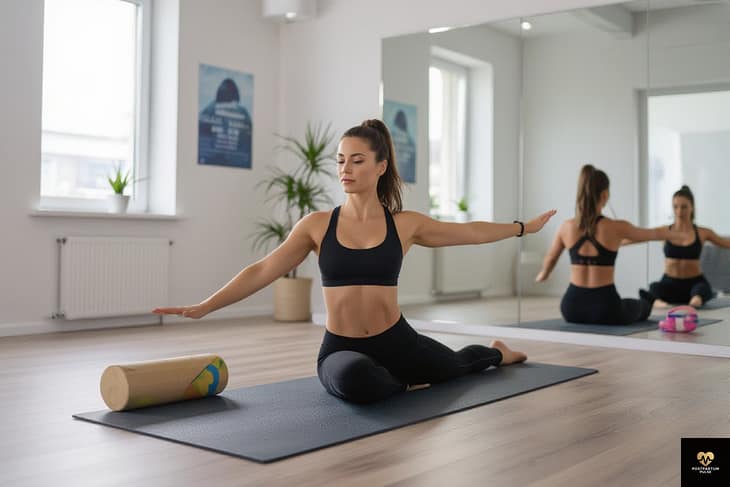
Pregnancy stretches the abdominal wall, weakens the pelvic floor, and often creates a separation in the rectus muscles known as diastasis recti. Because of these changes, traditional ab workouts (crunches, sit-ups, planks, etc.) may be ineffective or even harmful in the early postpartum phase.
A well-designed postpartum abs workout focuses on:
- Re-establishing mind-muscle connection
- Training the deep core muscles
- Improving pelvic stability
- Strengthening the transverse abdominis (TVA)
- Encouraging proper breathing and pressure management
- Reducing belly bulge linked to weakened core support
Before progressing to harder movements, the goal is to rebuild the inner core foundation.
The Core Anatomy Changes That Affect Your Postpartum Abs Workout
To understand how to rebuild your core effectively after birth, it helps to know which muscles you’re targeting during your postpartum abs workout:
1. Transverse Abdominis (TVA)
This is the “corset muscle” responsible for drawing your waist inward. TVA activation is the foundation of every postpartum abs workout.
2. Rectus Abdominis
The outer “six-pack” layer. Strengthening this safely requires first closing or reducing abdominal separation.
3. Obliques
Responsible for twisting and stabilizing movements. They must be trained intelligently to avoid pulling the linea alba.
4. Pelvic Floor
Although not an abdominal muscle, it forms the base of the core system and directly affects core strength, pressure, and engagement.
A targeted postpartum abs workout strengthens all these layers progressively.
How to Prepare for Your Postpartum Abs Workout
Before doing anything more advanced, your first step is to learn proper core engagement:
Step 1: Breathwork
Every postpartum abs workout begins with diaphragmatic breathing:
- Inhale to expand ribs
- Exhale to draw the belly in and up
- Maintain neutral spine
Step 2: TVA Activation
Use “hug the baby in” cueing:
- Exhale
- Draw the lower belly gently inward
- Avoid sucking in; think of tightening a corset
Step 3: Avoid Doming or Coning
If the belly pops outward, the exercise isn’t safe yet. Modify or regress.
According to the American College of Obstetricians and Gynecologists (ACOG), new mothers should ease into exercise gradually and focus on listening to warning signs like heavy bleeding, dizziness, or abdominal pain. You can read ACOG’s full postpartum exercise recommendations here:
https://www.acog.org/clinical/clinical-guidance/committee-opinion/articles/2020/04/physical-activity-and-exercise-during-pregnancy-and-the-postpartum-period
Level 1: Beginner Postpartum Abs Workout (Deep Core Foundation)
Perfect for rebuilding strength and reconnecting with the core.
1. Diaphragmatic Breathing (3–5 minutes)
Foundation of all core activation.
safe postpartum core exercises explains core-strengthening tips that align perfectly with your abs workout plan.
2. TVA Bracing (3 sets × 10 reps)
Pull belly inward on exhale without pelvic tilt.
3. Pelvic Tilts with TVA Activation (3 sets × 15 reps)
Pelvic floor control — because core work and pelvic floor rehab go hand in hand, and this article helps explain bladder control issues.
4. Heel Slides (3 sets × 10 reps/leg)
Keep lower back neutral and TVA engaged.
5. Marching (3 sets × 20 reps)
Alternate lifting knees toward chest with slow control.
6. Dead Bug – Modified (3 sets × 6–8 reps/side)
Arms bent, legs tabletop, move slowly.
7. Glute Bridge Holds (3 sets × 20 seconds)
Helps stabilize the pelvis and lower core.
This level of postpartum abs workout ensures safe reactivation without pressure on the abdominal wall.
For a clinically reviewed overview of how to safely reintroduce movement after childbirth, the Mayo Clinic offers a helpful guide on postpartum exercise and early core strengthening:
https://www.mayoclinic.org/healthy-lifestyle/labor-and-delivery/in-depth/exercise-after-pregnancy/art-20044596
Level 2: Intermediate Postpartum Abs Workout (Stability + Strength)
Move to this level only once you can complete Level 1 with no doming.
1. Full Dead Bugs (3 sets × 8–10 reps/side)
Opposite arm and leg extend.
2. Knee-Supported Side Plank (3 sets × 20–30 seconds/side)
Targets obliques without overloading the midline.
3. Bird Dog (3 sets × 10 reps/side)
Ideal for functional core control.
4. Reverse Slides (3 sets × 12 reps)
Use a towel on smooth floor; pull legs in and out.
5. Toe Taps from Tabletop (3 sets × 15 reps)
6. Standing Core Pull-Downs (3 sets × 12 reps)
Use band or cable; mimics woodchoppers safely.
As your postpartum abs workout progresses, stability becomes as important as strength.
Level 3: Advanced Postpartum Abs Workout (Strength + Function)
This stage includes challenging yet postpartum-safe movements.
1. Planks (3 sets × 20–45 seconds)
Only if no coning occurs.
2. High Knees + TVA Engagement (3 sets × 40 seconds)
Adds low-impact cardio.
3. Side Plank with Leg Lift (3 sets × 10 reps/side)
4. Mountain Climbers – Slow Motion (3 sets × 20 reps)
Focus on form over speed.
5. Standing Oblique Knee Drives (3 sets × 15/side)
6. Cable Rotations (3 sets × 10 reps/side)
Builds rotational strength safely.
This level completes the postpartum abs workout journey, helping you regain muscular definition and functional strength.
30-Minute Postpartum Abs Workout Routine (All Levels)

Here’s a structured session that combines activation, strength, and stability:
Warm-Up (5 minutes)
- Diaphragmatic breathing
- Pelvic tilts
- TVA activation
Main Workout (20 minutes)
- Heel Slides – 3×10
- Dead Bugs – 3×10
- Glute Bridges – 3×15
- Side Plank (knees) – 3×30 sec
- Bird Dog – 3×10/side
- Standing Band Rotations – 3×12/side
Cool Down (5 minutes)
- Rib expansion breathing
- Gentle spinal mobility
This session forms a safe and effective postpartum abs workout you can do 3–4 times weekly.
Common Mistakes During Postpartum Abs Workouts
1. Doing Crunches Too Early
This increases intra-abdominal pressure and worsens separation.
2. Ignoring TVA Activation
Without deep core engagement, outer abs take over.
3. Rushing into Planks or HIIT
High-intensity movements can weaken healing tissues.
4. Training Without Monitoring Coning
Doming = unsafe movement.
5. Overtraining
Your core needs recovery time.
Understanding these mistakes ensures a safe and effective postpartum abs workout.
Public-health guidelines from the Better Health Channel also highlight the importance of gentle progression, adequate rest, and listening to your body during postnatal exercise. Their full guide is available here:
https://www.betterhealth.vic.gov.au/health/healthyliving/postnatal-exercise
Signs Your Postpartum Abs Workout Is Working
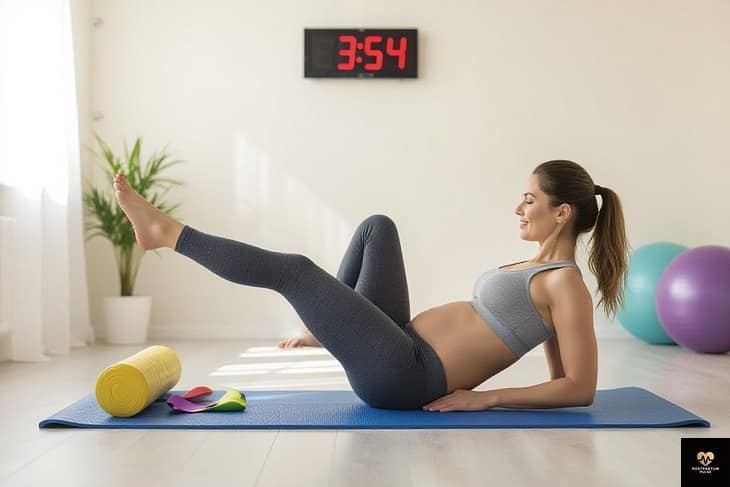
- Better posture
- Flatter lower belly
- Stronger pelvic stability
- Reduced coning
- Improved daily movement (lifting baby, standing, sitting)
With consistency, results typically appear within 6–12 weeks.
Frequently Asked Questions About Postpartum Abs Workout
1. When can I start my postpartum abs workout?
You can begin gentle breathing and TVA exercises as soon as you feel comfortable, but always follow medical clearance timelines for more intense movements.
2. Can I do planks after birth?
Yes, but only after you have deep core control and no abdominal coning. Start with modified planks first.
3. Does a postpartum abs workout fix diastasis recti?
A properly structured routine focused on TVA, breathing, and pressure control can significantly improve or close DR in many women.
4. How often should I train my postpartum abs?
Aim for 3–4 structured sessions per week, with light daily activation such as breathing and TVA work.
5. Are crunches safe during a postpartum abs workout?
Crunches should be avoided until core separation is healed and you have regained proper pressure control.
6. How long until I see results?
Most women notice improved core strength in 2–4 weeks and visual changes in 8–12 weeks with consistent training.
7. Can I do postpartum abs workouts while breastfeeding?
Yes. Breastfeeding does not affect your ability to train your abs safely.
8. What equipment do I need?
Most postpartum abs workouts can be performed with:
- Resistance bands
- Yoga mat
- Light weights
- Sliders or towels
9. Can a postpartum abs workout reduce belly fat?
Core training improves strength and posture, but overall fat loss depends on full-body training and nutrition.
10. Should I avoid any movements?
Avoid:
- Sit-ups
- Full push-ups early on
- Heavy twisting
- Any movement that creates doming
Key Takeaways
- A postpartum abs workout must begin with breathing, TVA activation, and deep core retraining.
- Avoid traditional crunches or planks until your core responds without doming.
- Progress from foundational moves to stability work, then to strength-based exercises.
- Consistency matters more than intensity.
- Proper core rebuilding improves strength, posture, and functional movement after birth.
- Watch for signs of progress: reduced coning, improved stability, better belly control.
- A structured postpartum abs workout can safely help restore core strength and confidence.