 Skip to content
Postpartum Medical Emergencies: Know the Warning Signs
October 17, 2026

Postpartum Medical Emergencies can happen after childbirth, and knowing the warning signs can help you get care quickly. Heavy bleeding that soaks more than one pad an hour, chest pain, trouble breathing, a seizure, a severe headache that won’t go away, or thoughts of harming yourself require emergency medical attention. Although postpartum recovery can feel overwhelming, knowing which symptoms mean “act now” versus “call your doctor today” can help you respond with confidence.
Key takeaways
- Heavy bleeding, chest pain, trouble breathing, seizure, fainting, one-sided weakness, and suicidal thoughts need emergency help right away.
- A pad soaked in an hour or less, large clots, or bleeding that suddenly gets heavier can signal postpartum hemorrhage.
- Severe headache with vision changes, upper belly pain, or sudden swelling can be postpartum preeclampsia.
- One swollen, warm, painful leg can be a blood clot, especially if chest symptoms follow.
- Fever, foul-smelling discharge, incision redness, and burning with urination usually need a same-day call.
Postpartum Medical Emergencies: Which Symptoms Need Immediate Help?
Some postpartum emergency symptoms mean you call 911 or get to an ER immediately, not after a nap or a “wait and see” hour. If you’re soaking through a pad in 60 minutes or less, having a seizure, or feeling chest pain, those are 911 calls.
The hardest part is that your body is exhausted and strange feelings are common after birth, so it’s tempting to dismiss serious warning signs as normal recovery. When in doubt about the symptoms below, you call rather than wait for a callback.
- Soaking a full pad in one hour or less, or passing clots larger than a golf ball
- Chest pain or tightness of any kind
- Trouble breathing or feeling like you can’t catch your breath
- Fainting or feeling like you’re about to faint
- A seizure
- Sudden one-sided weakness, a drooping face, or slurred speech
- Severe confusion or not knowing where you are
- Thoughts of harming yourself or your baby
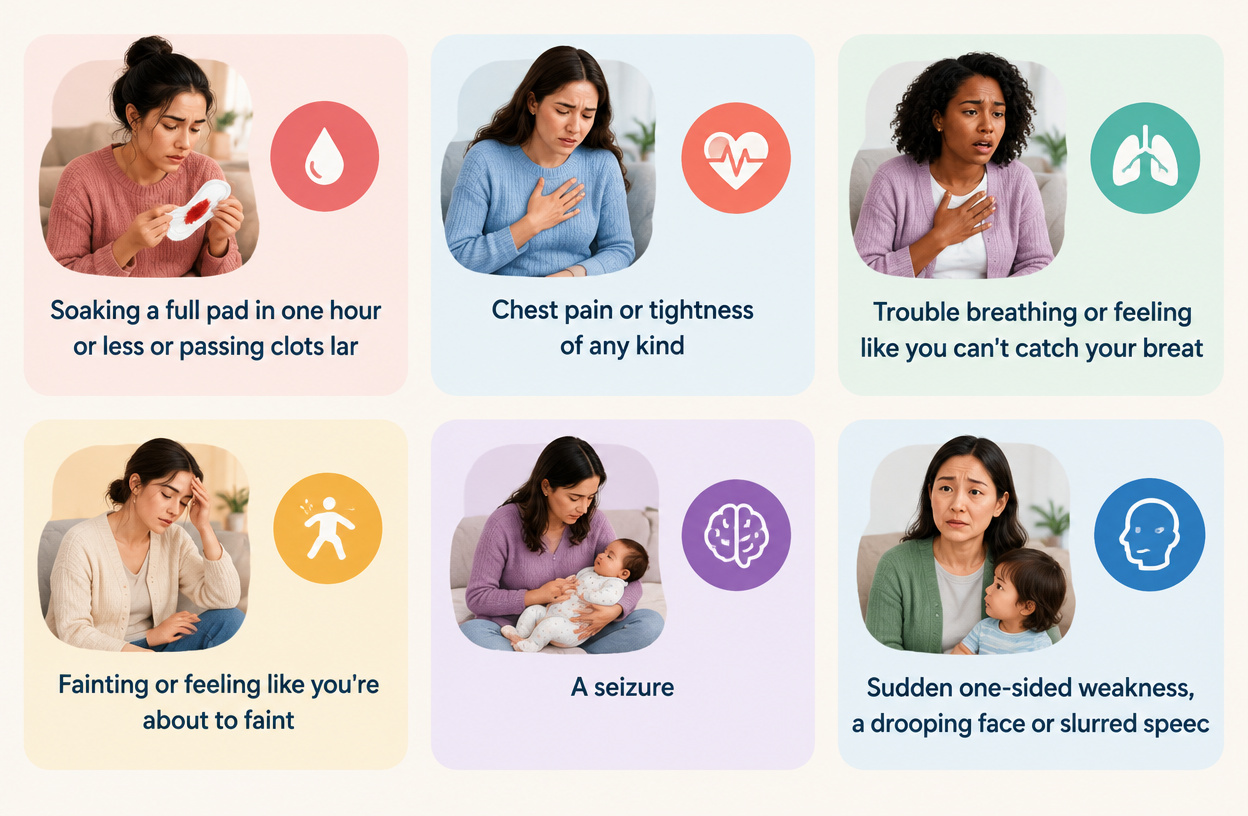
Do not drive yourself if you’re experiencing any of those symptoms. Fainting at the wheel, or losing consciousness from blood loss, is a real risk. Call 911 and tell them you’re a postpartum patient, because that detail helps the dispatcher send the right response.
Knowing when to call 911 postpartum versus when to call your provider is genuinely confusing, and some symptoms overlap. A fever of 100.4°F, a painful or swollen leg, or worsening headache are urgent enough to call your doctor the same day, but they don’t automatically require an ambulance unless other symptoms on this list appear alongside them. For a closer look at one particularly dangerous overlap, the signs of postpartum eclampsia deserve their own attention since they can look like a bad headache right up until they don’t.
What does dangerous bleeding look like after birth?
Dangerous postpartum bleeding isn’t just “heavy.” The clearest signs are soaking through a pad in under an hour, passing clots larger than a golf ball or plum, or watching your bleeding get heavier instead of gradually tapering off in the days after birth.

Normal lochia starts bright red and slows over the first week, shifting to pink and then yellowish discharge by week three or four. What’s not normal is a sudden surge after things seemed to be calming down, or blood that just won’t let up. If you’re on your third or fourth pad within a couple of hours, that’s the body sending a signal you can’t afford to ignore.
Clot size and pad count are your two practical measures
A grape-sized clot after a long night of rest is usually just pooled blood. A clot bigger than a golf ball is a different conversation entirely. My rule is simple: keep track of how many pads you’re going through and look at what’s on them. That information is exactly what emergency providers will ask you for, so having it ready speeds up care.
The most common mistake I see is waiting to find out whether the bleeding will slow on its own. With postpartum hemorrhage, blood loss can reach a dangerous level within minutes, not hours. Heavy postpartum bleeding can become dangerous quickly, so the safest move is to seek emergency care right away.
Watch for what comes with the bleeding
Postpartum hemorrhage signs rarely show up alone. Dizziness, a racing heartbeat, sudden chills, weakness in your arms or legs, and skin that looks pale or feels clammy are all signs your body is struggling to compensate for blood loss. Any one of those alongside heavy bleeding means call 911, not your nurse line.
Which headache, vision, or swelling symptoms point to preeclampsia?
Postpartum preeclampsia most often develops within a few days after birth, but it can happen up to 6 weeks later, even if your pregnancy blood pressure was perfectly normal. Watch for a severe headache that won’t budge with ibuprofen or acetaminophen, blurry vision or seeing spots or flashing lights, sudden swelling in your face or hands, or fever of 100.4°F (38°C) or higher.
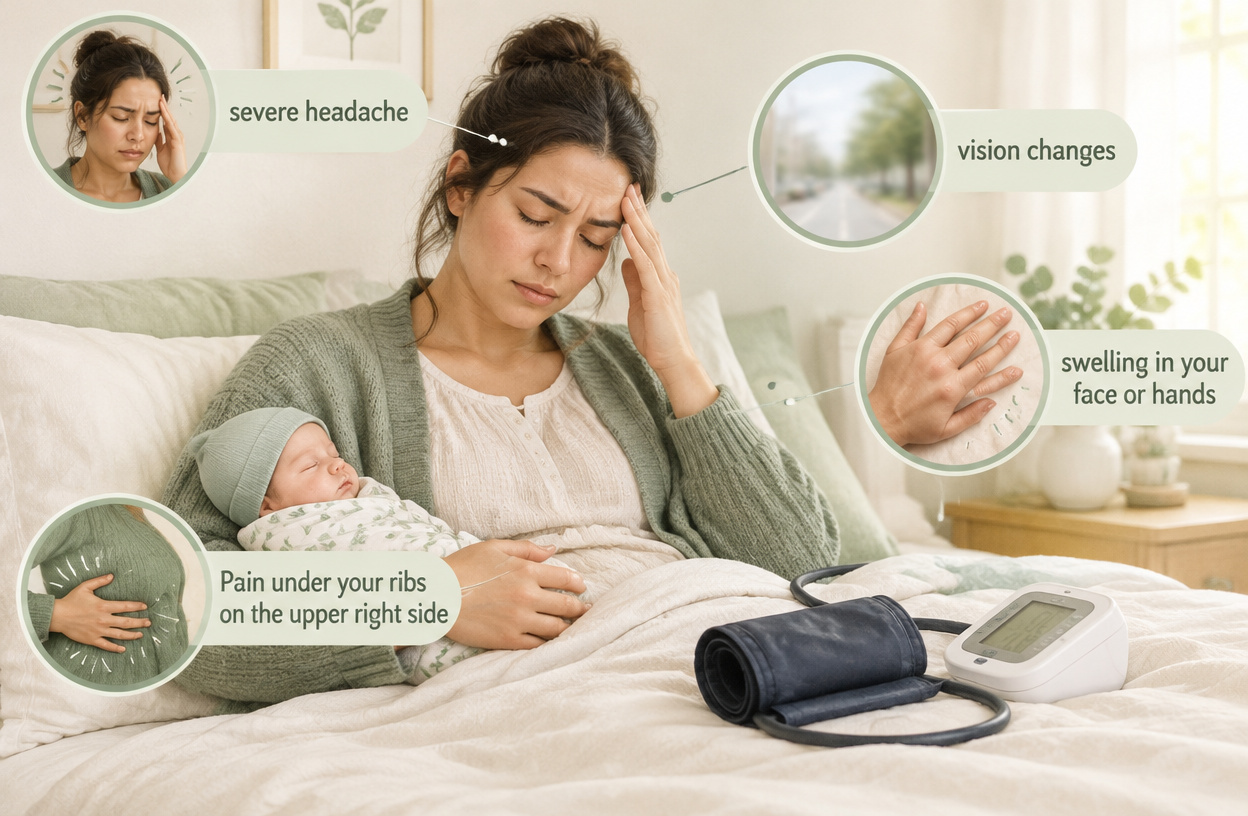
Some swelling is completely ordinary after delivery. Puffy ankles? That’s usually your body offloading extra fluid. But swelling in your face or hands paired with a pounding headache or any vision change is different. That combination needs same-day attention at minimum. If the headache comes on fast and hard, call 911.
Pain under your ribs on the upper right side, or a general feeling of sudden illness alongside any of the above, can mean the condition is affecting your liver. Don’t wait. Treat upper-right belly pain as an emergency until a provider proves otherwise.
Very high blood pressure often produces a pounding sensation in the head rather than a typical tension headache. Some women describe pressure behind their eyes or at the base of the skull. If that’s what you’re feeling, you can check your blood pressure at a pharmacy while calling for help, but don’t let the errand delay the call. You can read more about what drives these numbers in this guide to postpartum high blood pressure.
Which chest, breathing, and leg symptoms could be a blood clot?
You need to know two types: a clot in the leg (deep vein thrombosis) and a clot that has traveled to the lungs (pulmonary embolism). Both are genuine emergencies. In your leg, watch for swelling, warmth, redness, or pain in one calf. In your lungs, sudden shortness of breath is the main sign, along with chest pain that sharpens when you breathe in, coughing up blood, or a racing heartbeat.
Clots move fast. A clot sitting in a leg vein can break off and reach the lungs within minutes. That’s why the rule is simple: any combination of those symptoms means 911, not a wait-and-see call to the office.
One thing that trips people up is mistaking a clot for ordinary soreness after labor or lifting. Muscle soreness usually shifts, easing when you change position or gently stretch. Clot pain tends to be constant, and it comes with swelling or skin that feels warm to the touch. Don’t massage the leg trying to work out the “knot” because massaging a clot can dislodge it.
| Symptom | Likely muscle soreness | Possible blood clot — seek emergency care |
|---|---|---|
| Leg pain | Shifts with movement or stretching | Constant, often in one calf only |
| Swelling | Both legs, mild | One leg, noticeable and firm |
| Skin temperature | Normal | Warm or hot to the touch |
| Breathing | Normal | Sudden shortness of breath or pain on inhale |
| Heart rate | Normal | Fast or pounding without exertion |
| Cough | None | Coughing up blood |
When should I call my doctor today instead of 911?
Call your doctor’s office the same day you notice these symptoms, not tomorrow morning. Fever, foul-smelling discharge, worsening incision pain, burning when you urinate, severe pelvic pain, and frightening mood changes without a plan to harm yourself or your baby all need a same-day call, not a wait-and-see approach.
Same-day does not mean “it can wait until the next available appointment.” Most OB practices have an after-hours line for exactly these calls. Use it. If you can’t reach anyone within an hour or two and your symptoms are getting worse, move straight to urgent care or the emergency room.
Here’s the same-day call list to keep somewhere visible:
- Fever of 100.4°F (38°C) or higher, especially with chills or fatigue
- Vaginal discharge with a foul or unusually strong odor
- Incision site (C-section or perineal tear) that is increasingly red, warm, or oozing
- Burning or pain when urinating, which can signal a UTI that spreads fast postpartum
- Severe pelvic or abdominal pain that isn’t improving
- Mood changes that feel scary or out of control, but without thoughts of hurting yourself or your baby
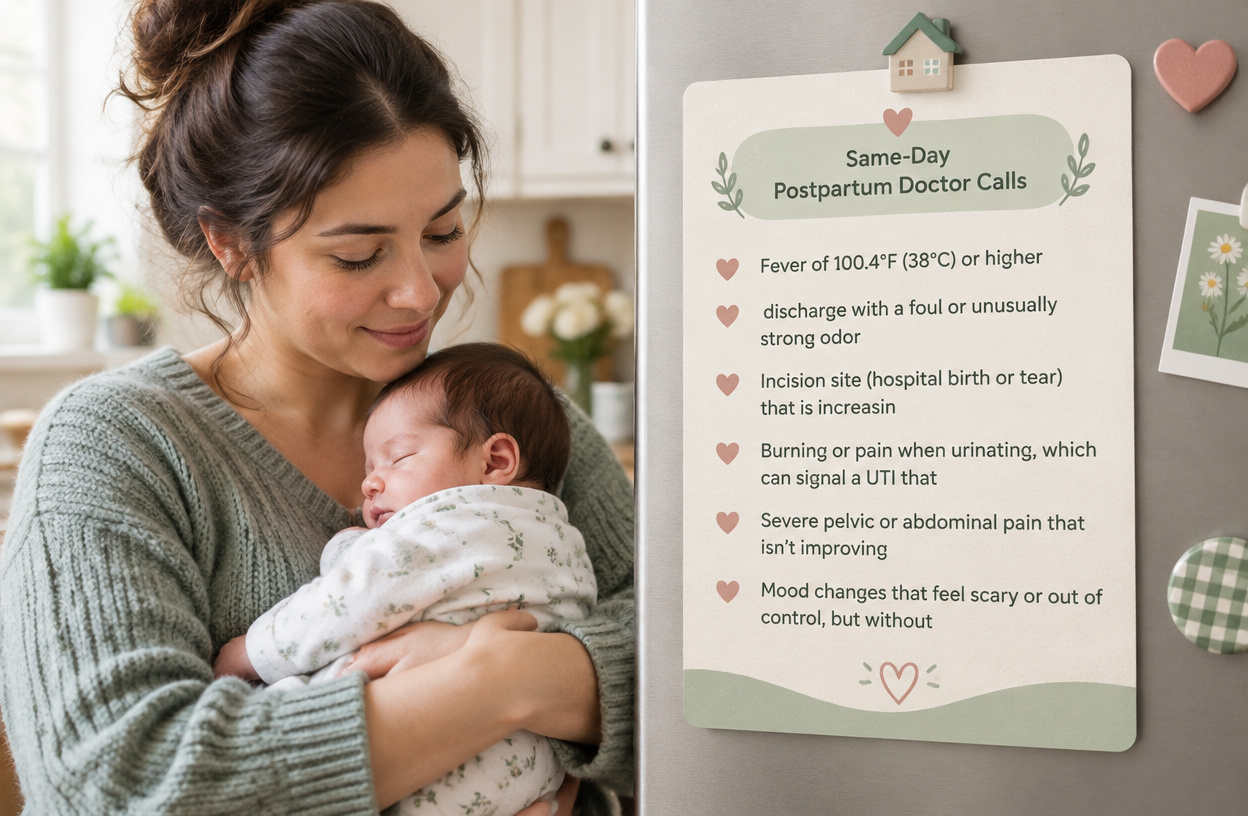
That last point matters. Intrusive thoughts, rage, or feeling completely detached from reality are warning signs after birth that deserve medical attention quickly. If you’re unsure whether what you’re feeling is baby blues or something more serious, the differences between baby blues and PPD are worth reading before your call, so you can describe your symptoms clearly.
Fast-spreading redness around an incision, a fever of 100.4°F (38°C) or higher with severe symptoms like confusion or difficulty breathing, or sudden new weakness anywhere in your body should push you past the doctor’s office and straight to emergency care. Call 911 if you can’t reach your doctor immediately and your symptoms are severe or rapidly worsening.
How do I act fast if I think it’s an emergency?
Call 911 first. Don’t spend time texting your partner or searching your symptoms. If something feels seriously wrong in the first weeks after birth, those minutes matter more than certainty.
- Call 911 and stay on the line. The dispatcher will tell you exactly what to do while help is on the way.
- Unlock your front door if you can get there safely, so paramedics can reach you without delay.
- Hand the baby to another adult in the house. If you’re alone, place the baby somewhere safe before you sit or lie down.
- Tell the dispatcher your delivery date, whether you had a vaginal birth or C-section, what symptoms you’re having right now, whether you’re bleeding heavily, and any medications you’ve already taken.
- Do not drive yourself. Dizziness, heavy bleeding, shortness of breath, or feeling faint at the wheel is a second emergency on top of the first.
- If you called your OB’s triage line instead of 911, follow the nurse’s instructions exactly until you hear otherwise.
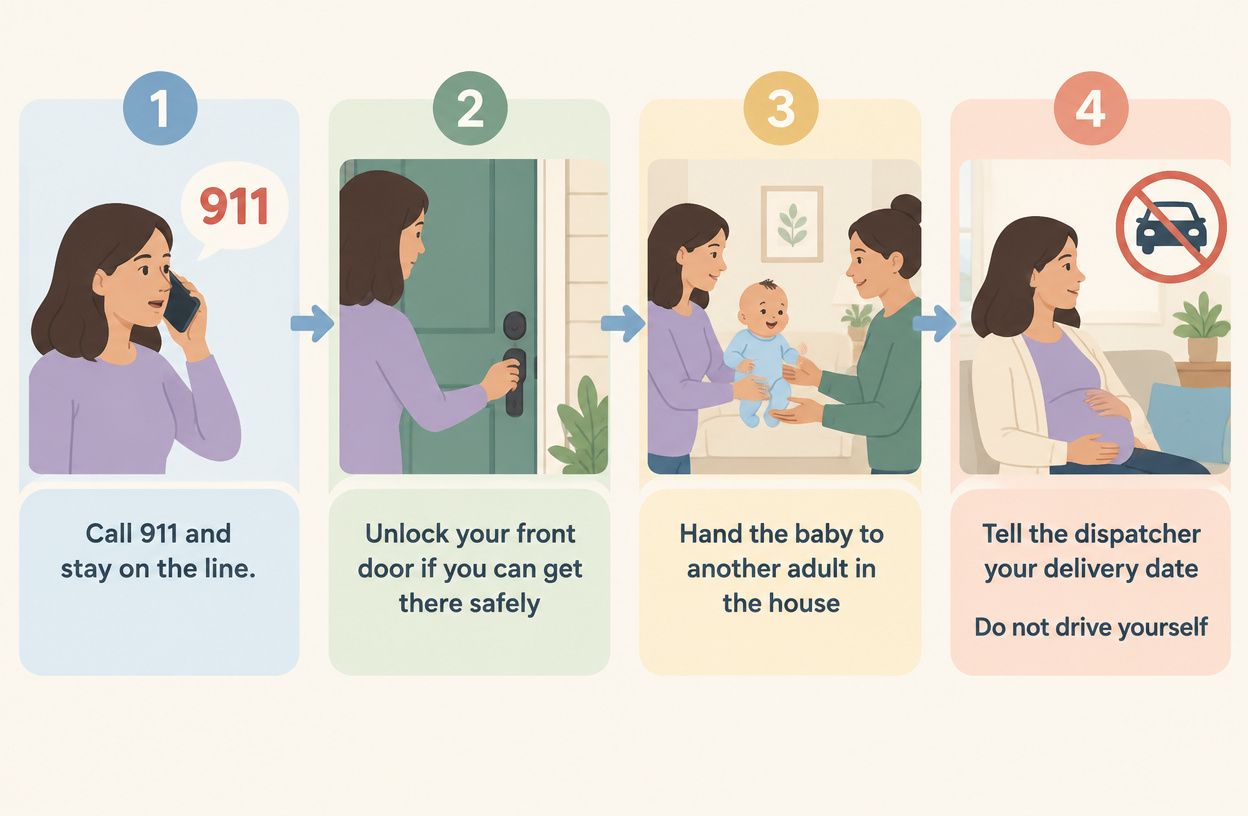
My rule is simple: if you’re unsure whether it’s 911 or a doctor call, choose 911. You can always be assessed and sent home. You can’t undo a delay.
Frequently asked questions
Can postpartum anxiety feel like an emergency?
Panic attacks and postpartum anxiety can cause a racing heart, overwhelming fear, and physical tension that feel terrifying, but they’re different from a medical emergency. Chest pain, real trouble breathing, fainting, or any thoughts of harming yourself do require a 911 call or an ER visit right away. If mood symptoms are severe enough that you feel unsafe, don’t wait for a routine appointment to open up.
How long after birth can these emergencies happen?
Serious postpartum complications don’t stop at hospital discharge. Postpartum preeclampsia, blood clots, and infection can appear days or even weeks after delivery. Postpartum preeclampsia most often develops within a few days after birth, but it can happen up to 6 weeks later. The same goes for blood clots and infection—keep the warning signs in mind throughout the full six-week postpartum period, not just the first 48 hours. According to ACOG guidance, serious complications don’t stop at hospital discharge.
What should I do if I’m alone with the baby and think I’m having a postpartum emergency?
Call 911 first. Then place the baby in a crib, bassinet, or another safe flat surface and stay on the phone with the dispatcher. The 911 operator can talk you through what to do until help arrives, and that’s exactly what they’re trained for. Trying to drive yourself or manage alone is the one thing to avoid.
Can I trust a telehealth visit for postpartum warning signs?
Telehealth is genuinely useful for triage: a provider can help you figure out whether what you’re feeling needs urgent attention. But chest pain, heavy bleeding that won’t slow down, difficulty breathing, a seizure, or any stroke-like symptom (sudden numbness, slurred speech, vision loss) cannot be fully assessed over a video call. Those symptoms need in-person emergency care, and the telehealth conversation should happen on your way there, not instead of going.