 Skip to content
Postpartum Bleeding: What’s Normal, What’s Not & When to Worry (Expert Guide)
May 23, 2026

Bringing your baby home can feel like stepping into a whole new world – and your body is healing right alongside you. One of the most common surprises in the fourth trimester is postpartum bleeding, also called lochia. If you’re wondering whether your flow, clots, color changes, or timing are normal, you’re not alone.
The short answer: some bleeding after birth is expected, whether you had a vaginal delivery or a C-section. But there are also times when postpartum bleeding can signal that you need medical care quickly. This guide from Postpartum Pulse will help you understand what’s normal, what’s not, and what to expect after postpartum bleeding begins – so you can recover with more confidence and less fear.
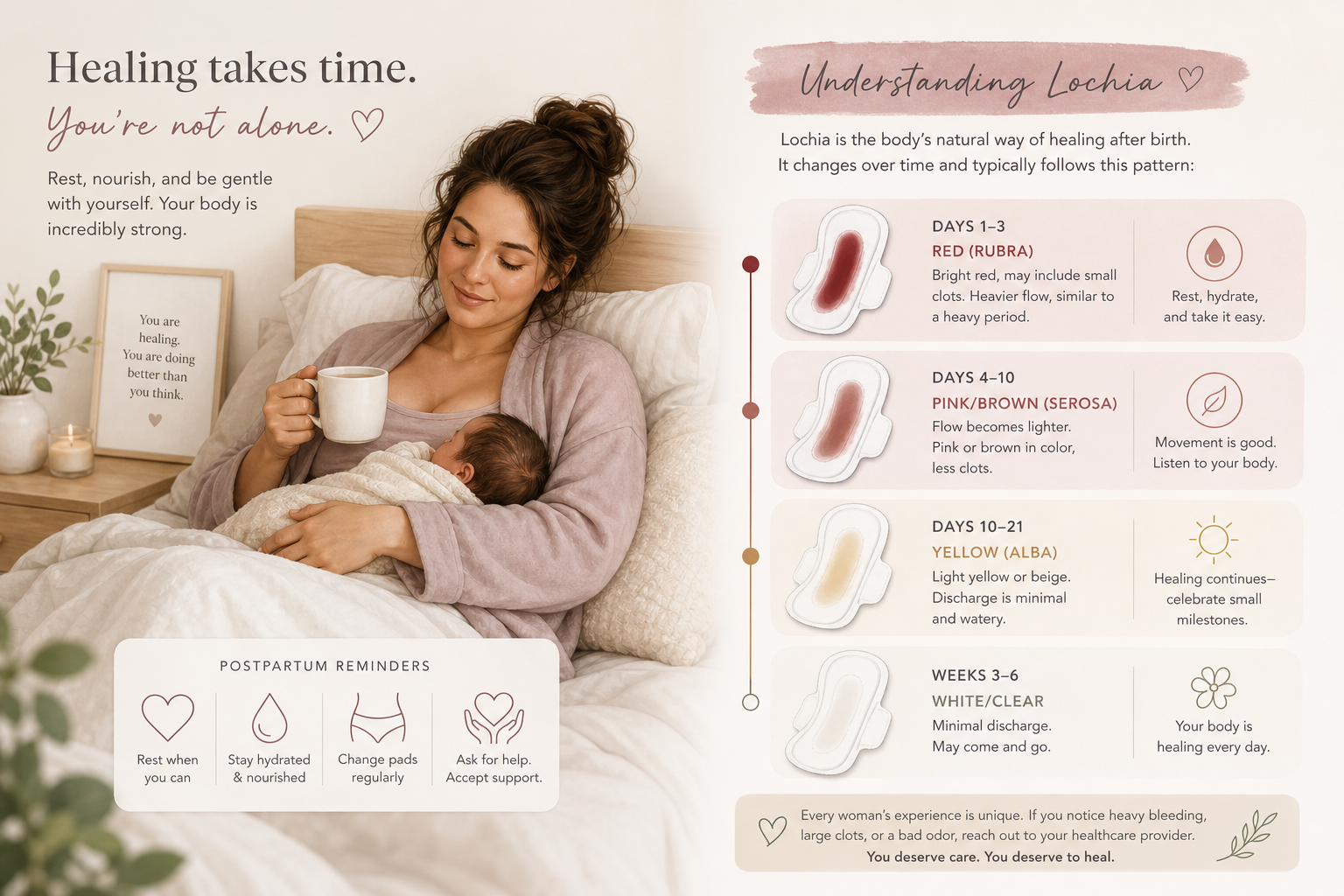
What Is Postpartum Bleeding?
Postpartum bleeding is your body’s way of clearing out the blood, mucus, and uterine tissue left behind after pregnancy and birth. This discharge is called lochia.
It happens because your uterus is shrinking back down to its pre-pregnancy size and healing where the placenta was attached. That healing process takes time, which is why bleeding can continue for several weeks.
Is postpartum bleeding normal after every birth?
Yes. You can have postpartum bleeding after:
- Vaginal birth
- C-section
- Induced labor
- Unmedicated labor
- Assisted birth
If you had a C-section, bleeding may sometimes be lighter than after a vaginal delivery, but it still usually happens.
What Does Normal Postpartum Bleeding Look Like?
Normal postpartum bleeding usually follows a pattern: it starts heavier and red, then gradually becomes lighter, browner or pinker, and later turns yellowish-white or creamy.
You may notice:
- A heavier flow in the first few days
- Small clots, especially early on
- A stale or menstrual-like smell
- Brief increases in bleeding after activity, breastfeeding, or getting up from bed
What is lochia made of?
Lochia can contain:
- Blood
- Uterine lining tissue
- Mucus
- White blood cells
- Small clots
This is why postpartum bleeding can look different from a normal menstrual period.
The 3 Stages of Lochia
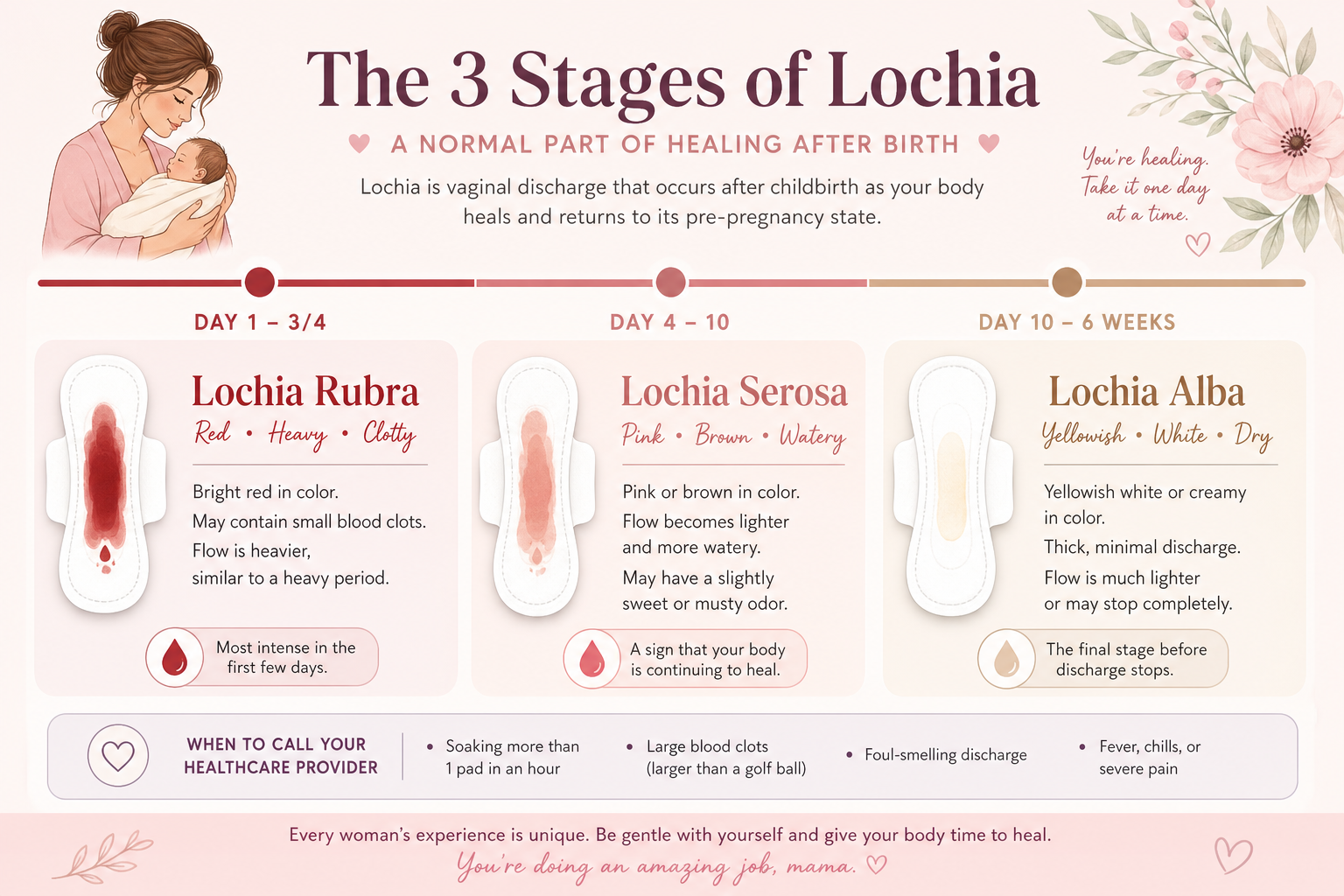
Understanding the stages of lochia can make postpartum recovery feel much less alarming.
| Stage | Timing | Color | Flow | What’s Typical |
|---|---|---|---|---|
| Lochia rubra | Days 1–4 | Bright red to dark red | Heavy | Period-like bleeding, small clots, cramping |
| Lochia serosa | Days 4–12 | Pink, brown, or reddish-brown | Moderate | More watery, fewer clots |
| Lochia alba | Around day 10 to 6 weeks or longer | Yellowish-white or creamy | Light | Spotting or light discharge, little to no blood |
Lochia rubra
This is the first and heaviest stage. It often feels like a heavy period. You may soak a thick pad every few hours, especially in the first days.
Normal signs in this stage include:
- Bright or dark red bleeding
- Small clots
- Mild cramping
- A stronger flow when standing up or breastfeeding
Lochia serosa
As healing progresses, bleeding usually becomes:
- Lighter
- Thinner
- Pinkish or brownish
- Less clotty
This stage can still vary from day to day, especially if you’re more active.
Lochia alba
This is the final stage of postpartum discharge. It is usually:
- Yellowish-white
- Creamy or pale
- Light spotting or discharge
- Nearly blood-free
Many mothers worry this means something is wrong because it no longer looks like “bleeding,” but this is often a normal part of recovery.
How Long Does Postpartum Bleeding Last?
For most women, postpartum bleeding lasts about 4 to 6 weeks, though some may notice light discharge or traces of lochia for up to 8 weeks.
After postpartum bleeding starts, what changes over time?
Here’s a general timeline:
- Days 1–3: heaviest bleeding
- Days 4–10: flow usually starts to lighten
- Weeks 2–6: spotting or lighter discharge becomes more common
- Up to 8 weeks: some lingering light discharge may continue
Every recovery is different. Your personal timeline can be affected by:
- Vaginal birth vs. C-section
- Breastfeeding
- Activity levels
- Whether this is your first baby
- How quickly your uterus contracts
Postpartum bleeding is just one part of the healing journey. Understanding how your body recovers overall can make this phase feel much less overwhelming. You can explore a more complete roadmap in our postpartum recovery guide to know what to expect week by week.
What Can Temporarily Make Bleeding Heavier?
A temporary increase in bleeding does not always mean something is wrong.
You may notice a brief surge:
- After breastfeeding or pumping
- After walking too much or climbing stairs
- When getting out of bed in the morning
- After overdoing chores or exercise
This happens because your uterus is contracting and gravity can release pooled blood when you stand.
When is a temporary increase still normal?
A temporary increase may still be normal if:
- It settles down with rest
- You’re not soaking a pad in an hour
- The clots are small
- You don’t have fever, dizziness, or severe pain
At Postpartum Pulse, one of the most helpful recovery reminders we share is this: “lighter tomorrow” is often a better sign than “perfect today.” Postpartum healing is rarely linear.
Postpartum Bleeding vs. Your First Period
Many mothers are unsure whether bleeding later on is still lochia or their first postpartum period.
Here’s a quick comparison:
| Feature | Lochia | First Postpartum Period |
|---|---|---|
| Starts | Immediately after birth | Weeks to months later |
| Contains | Blood, mucus, tissue | Menstrual blood |
| Color changes | Red to pink/brown to yellow-white | Usually period-like red/dark flow |
| Duration | Often several weeks | Usually 3–7 days |
| Timing with breastfeeding | Happens regardless | May be delayed if breastfeeding |
Can postpartum bleeding stop and start again?
A mild ebb and flow can happen. But if bleeding completely stops and then comes back very heavy, check in with your healthcare provider. It may be your period – or it could signal a complication.
What Is Not Normal Postpartum Bleeding?
Some symptoms go beyond the range of normal healing and should not be ignored.
Watch for:
- Soaking through more than one pad an hour
- Large clots, especially egg-sized, golf-ball-sized, or larger
- Bleeding that becomes much heavier instead of lighter
- Foul-smelling discharge
- Fever or chills
- Dizziness, faintness, or racing heart
- Severe pelvic or abdominal pain
- Swelling or worsening pain around the vagina or perineum
“A warning sign of postpartum hemorrhage is bleeding that soaks through more than one pad an hour or passing blood clots the size of an egg or larger.” – Mayo Clinic
When to Call Your Doctor Right Away
Contact your doctor, midwife, or postpartum care team urgently if you have:
Heavy bleeding
Especially if you are:
- Soaking a maxi pad every hour
- Passing large clots
- Feeling weak or faint
Signs of infection
These include:
- Foul or fishy odor
- Greenish discharge
- Fever
- Chills
- Uterine tenderness
Signs of postpartum hemorrhage
This can be an emergency. Seek immediate care if heavy bleeding comes with:
- Dizziness
- Rapid heartbeat
- Shortness of breath
- Pale skin
- Severe weakness
Possible Causes of Abnormal Postpartum Bleeding
While many women heal without problems, abnormal bleeding can happen for several reasons.
| Possible Cause | What It Means |
|---|---|
| Uterine atony | The uterus isn’t contracting well after birth |
| Retained placental tissue | Small pieces of placenta remain in the uterus |
| Infection / endometritis | Infection in the uterus can cause bleeding and foul discharge |
| Subinvolution | The uterus is shrinking more slowly than expected |
| Laceration-related bleeding | Tears in the birth canal may continue bleeding |
Knowing these possibilities can help you act quickly – but not panic unnecessarily. Only a medical professional can diagnose the cause.
What About Clots?
Small clots can be normal in the first days after giving birth. They’re often most noticeable:
- After sleeping
- After sitting for a long time
- When first standing up
What size clot is concerning?
As a simple guide:
- Small, grape-sized clots: often normal early on
- Golf-ball-sized clots or larger: call your provider
- Repeated large clots: urgent medical advice is needed
If you’re unsure, trust your instincts. A big part of postpartum confidence is learning that your concerns matter.
How to Manage Postpartum Bleeding Safely at Home
Use the right pads
For the first weeks, use:
- Thick maternity pads
- Maxi pads
- Disposable postpartum underwear if preferred
Avoid tampons and menstrual cups until your provider says it’s safe.
Rest more than you think you need
One of the biggest content gaps in many articles is how strongly overexertion can affect bleeding. If your bleeding suddenly gets heavier after cleaning, lifting, or doing too much, your body may be asking for more rest.
Keep an eye on patterns
You do not need to obsess over every drop, but it helps to note:
- Whether flow is generally trending lighter
- How often you change pads
- Clot size
- Any odor changes
- Associated symptoms like pain, fever, or dizziness
Protect your emotional wellbeing too
Bleeding can feel unsettling, especially if you weren’t prepared for how long recovery lasts. At Postpartum Pulse, we believe postpartum education should include emotional reassurance – not just symptom lists. If bleeding is making you anxious, ask for help, rest, and let someone else carry the mental load for a while.
Postpartum Bleeding and Breastfeeding
Breastfeeding can trigger uterine contractions because it releases oxytocin. That can cause:
- Cramping
- A brief gush of blood
- A temporary increase in discharge
This is often a normal sign that your uterus is contracting and healing.
Does breastfeeding affect how long bleeding lasts?
Sometimes. Some mothers notice bleeding resolves sooner with frequent breastfeeding because oxytocin helps the uterus contract. Others still bleed for several weeks. Both can be normal.
Since breastfeeding can affect uterine contractions and bleeding patterns, many mothers also wonder how their milk supply is progressing at the same time. If you’re unsure what’s normal, this guide on after giving birth when does milk come in can give you clarity and reassurance.
Postpartum Bleeding After a C-Section
A C-section does not prevent lochia. Even though your baby was delivered surgically, your uterus still needs to shed the lining and heal.
You may notice:
- Slightly lighter bleeding than some vaginal births
- Similar color changes over time
- A need to monitor both incision recovery and bleeding
If you’re recovering from a C-section, bleeding plus surgical healing can feel like a lot at once. This is exactly why supportive, accessible postpartum education matters.
A Gentle Recovery Checklist
If you want a practical way to monitor yourself after postpartum bleeding begins, use this simple checklist:
Likely normal
- Bleeding gradually gets lighter
- Color shifts from red to pink/brown to pale yellow-white
- Small clots early on
- Mild cramping
- Temporary increase after activity or breastfeeding
Call your provider
- Bleeding stays bright red and heavy after the first week
- New foul smell
- New fever or chills
- Increasing pelvic pain
- Bleeding suddenly becomes much heavier
Seek urgent care
- Soaking a pad in an hour
- Large clots
- Fainting, dizziness, or rapid heartbeat
- Severe weakness
- Shortness of breath
What Many Articles Miss About Recovery After Postpartum Bleeding
Most competitor articles explain the stages well, but they often gloss over a few things that matter deeply to real mothers:
1. Healing is not always linear
You can have a lighter day, then a heavier day, especially after activity. That does not always mean something is wrong.
2. Emotional reassurance matters
Postpartum recovery is not just physical. Ongoing bleeding can make mothers feel vulnerable, frustrated, or even frightened.
3. Rest is treatment
Many women are told postpartum bleeding is normal, but not told clearly enough that doing too much can worsen it.
4. Support helps prevent panic
When mothers understand what’s typical, they’re more likely to recognize true warning signs without spiraling over every change.
That’s the heart of Postpartum Pulse: trusted postpartum education, practical recovery tips, compassionate reassurance, and confidence-building support for early motherhood.
Final Thoughts
Postpartum bleeding is a normal part of your body’s healing process – but normal does not mean easy. Knowing the expected stages, colors, and flow changes can help you feel calmer and more prepared after postpartum bleeding begins. Just as importantly, knowing the warning signs can help you get care quickly if something feels off.
If you want postpartum guidance that goes beyond basic symptom checklists, Postpartum Pulse is here for you with compassionate, expert-style content on physical recovery, maternal mental health, breastfeeding support, and gentle self-care through the fourth trimester. If you’re navigating healing one day at a time, you deserve information that makes you feel informed, supported, and less alone.
FAQ
How do I know if my postpartum bleeding is normal?
Normal postpartum bleeding usually starts heavy and red, then gradually becomes lighter, pink or brown, and later yellowish-white over several weeks. Small clots and brief increases after activity or breastfeeding can be normal, as long as you are not soaking a pad every hour or feeling unwell.
What kind of bleeding is not normal postpartum after?
Bleeding is not normal if it becomes very heavy, soaks through more than one pad an hour, includes large clots, smells foul, or comes with fever, dizziness, or severe pain. These can be signs of infection, retained tissue, or postpartum hemorrhage and should be checked quickly.
What are the 4 T’s of postpartum hemorrhage?
The 4 T’s are Tone, Tissue, Trauma, and Thrombin. They refer to poor uterine tone, retained placental tissue, birth-related injury, and clotting problems, which are major causes of postpartum hemorrhage.
What kind of bleeding is not normal postpartum after?
Abnormal postpartum bleeding includes sudden heavy bleeding after it had slowed, passing golf-ball-sized clots, or bleeding with faintness, rapid heartbeat, or chills. If you notice these symptoms, contact your provider or seek urgent care right away.
What is stage 1 postpartum hemorrhage?
Stage 1 postpartum hemorrhage generally refers to early excessive bleeding after birth that is above normal expectations and needs prompt medical attention. The exact definition can vary by hospital protocol, but it is treated seriously to prevent worsening blood loss.