 Skip to content
Good News: After Giving Birth, When Does Milk Come In? Expert Signs & Timeline
May 3, 2026

After Giving Birth, When Does Milk Come In?
If you’re wondering after giving birth when does milk come in, the short answer is: for many mothers, fuller milk production starts around 2 to 5 days after birth. Before that, your body makes colostrum, a small amount of concentrated early milk that is incredibly nourishing and exactly what most healthy full-term newborns need in the first days.
Those first postpartum days can feel emotional, exhausting, and uncertain. It’s common to worry that your baby isn’t getting enough, especially when your breasts don’t feel full yet or you only see drops when hand expressing. At Postpartum Pulse, we want you to know this: small amounts in the beginning are normal, and “milk coming in” usually refers to the shift from colostrum to larger volumes of transitional milk.
Many parents wonder after giving birth when does milk come in, especially when they only see drops of colostrum at first.
If you’re navigating early recovery, read our guide on postpartum recovery after birth:
“Breast milk typically comes in within two to three days after childbirth.” – Mayo Clinic
After Giving Birth When Does Milk Come In? Normal Timeline Explained
What “Milk Coming In” Actually Means
Many parents think they have “no milk” until their breasts suddenly feel heavy or start leaking. In reality, your body usually begins milk-making much earlier.
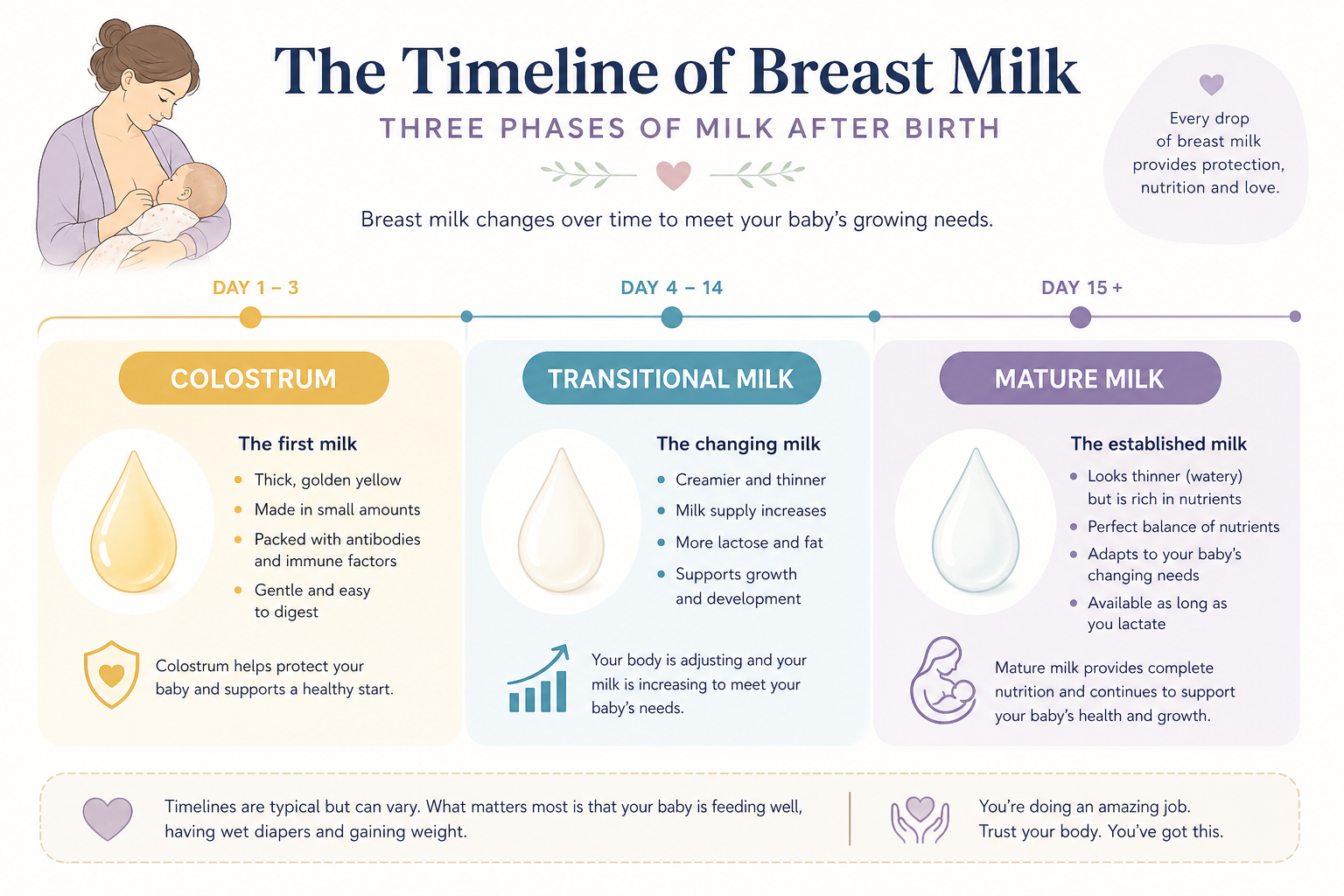
There are three phases of breast milk:
| Phase | Typical Timing | What It’s Like | Why It Matters |
|---|---|---|---|
| Colostrum | During pregnancy through the first 2–5 days after birth | Thick, yellow or golden, small in volume | Packed with antibodies and nutrients |
| Transitional milk | Around days 2–5 up to about 2 weeks | Increasing volume, creamier, lighter in color | Helps meet your baby’s growing energy needs |
| Mature milk | Around 10–15 days after birth onward | Thinner-looking, bluish-white to creamy | Provides balanced nutrition and hydration |
So when people say milk “comes in,” they usually mean the point when milk volume noticeably increases and your breasts begin to feel fuller.
The Normal Timeline After Birth
Day 0 to Day 2: Colostrum
In the first couple of days, your breasts produce colostrum. It may seem like only drops or teaspoons, but that does not mean it isn’t enough. Newborn stomachs are tiny, and colostrum is designed for that stage.
“Colostrum, the initial milk produced in the first 2–3 days postpartum, is secreted in small amounts – approximately 40–50 ml on the first day – but is sufficient to meet an infant’s needs during this period.” – NCBI Bookshelf
Day 2 to Day 5: Transitional Milk Begins
This is when many mothers notice:
- fuller, heavier breasts
- warmth or tingling
- leaking
- firmer tissue
- baby swallowing more often during feeds
This is the stage most people describe as milk coming in.
Day 10 to Day 15: Mature Milk
By around the second week, milk usually becomes more mature in composition. It may look thinner than expected, but that’s normal. Breast milk changes during a feeding and throughout the day to match your baby’s needs.
Signs Your Milk Is Coming In
You may notice one or several of these signs:
- breasts feel fuller, heavier, or warmer
- sudden increase in breast size or firmness
- leaking between feeds or overnight
- baby seems to swallow more rhythmically
- more wet and dirty diapers
- breasts feel softer after feeding or pumping
Not everyone feels this shift dramatically. Some mothers have a very obvious “overnight” change, while others notice a gradual increase.
What It Feels Like Physically
Milk coming in can feel reassuring, but it can also feel uncomfortable.
Common sensations include:
- fullness
- tightness
- heaviness
- warmth
- mild aching
- temporary engorgement
If your breasts feel very hard, shiny, painful, or your baby is struggling to latch, you may be dealing with engorgement rather than just normal fullness. Gentle milk removal, frequent feeding, and lactation support can help.
If breasts feel overly full or painful, see our article on postpartum breast engorgement relief:
What Can Affect When Milk Comes In?
The timing is not the same for everyone. Some mothers notice fuller milk at 2 or 3 days, while others may not feel it until day 4 or 5.
Possible reasons milk may come in later include:
- cesarean birth
- significant blood loss after delivery
- severe stress or exhaustion
- diabetes
- thyroid conditions
- obesity
- infection or fever
- delayed or infrequent milk removal
- latch difficulties
- baby sleepiness, prematurity, or jaundice
A later timeline does not mean you have failed, and it does not automatically mean you won’t breastfeed successfully.
When Is It Considered Delayed?
Milk production is often considered delayed when the larger increase in volume has not happened by about 72 to 120 hours postpartum or when it remains clearly low beyond the first several days.
Johns Hopkins notes that while milk often comes in around 3 to 5 days after birth, some situations can delay the rise in milk production further.
When to get extra help sooner
Reach out to a lactation consultant or healthcare provider if:
- your milk has not noticeably increased by day 4 or 5
- baby has very few wet diapers
- baby seems too sleepy to feed effectively
- nursing is very painful
- your baby is losing more weight than expected
- your breasts remain extremely engorged and baby cannot latch
- you had a complicated birth or major blood loss
- you suspect thyroid, hormonal, or blood sugar issues
At Postpartum Pulse, we encourage mothers to seek help early, not because something is necessarily wrong, but because early support can protect feeding, comfort, and confidence.
How to Support Milk Coming In
1. Feed Early and Often
Frequent milk removal is one of the most powerful signals to your body. If possible:
- offer the breast at early hunger cues
- aim for at least 8–12 feedings in 24 hours
- avoid waiting for intense crying before feeding
2. Prioritize Skin-to-Skin Contact
Holding your baby skin-to-skin can support feeding instincts, calm both of you, and help stimulate hormones involved in milk production.
3. Make Sure Latch and Milk Transfer Are Effective
A good latch matters. If your baby is only nibbling at the nipple or not transferring milk well, your body may not get a strong enough signal to increase supply.
Signs milk transfer may be going well:
- rhythmic suck-swallow pattern
- baby seems satisfied after some feeds
- breasts soften after feeding
- diaper output improves
4. Hand Express or Pump If Needed
If your baby is sleepy, premature, jaundiced, separated from you, or having latch trouble, hand expression and pumping can help protect your supply.
This is especially important in the first few days if direct feeding is not going smoothly.
5. Rest, Hydrate, and Eat Regularly
You do not need a perfect diet to make milk, but postpartum recovery matters. Try to:
- drink to thirst
- eat regular balanced meals
- rest whenever possible
- accept help with chores and meals
6. Address Engorgement Gently
If breasts are too firm for baby to latch:
- use warmth briefly before feeding
- hand express a little to soften the areola
- feed or pump often
- use a cool compress after feeds for comfort
What If Baby Seems Hungry Before Milk Comes In?
This is one of the biggest fears in early motherhood. A cluster-feeding baby can make it seem like nothing is there. But frequent feeding in the first days is often normal newborn behavior, not proof of failure.
Here’s what to watch instead:
| Reassuring Sign | Why It Matters |
|---|---|
| Baby has regular wet/dirty diapers | Suggests intake is happening |
| You hear or see swallowing | Indicates transfer |
| Baby wakes to feed and has periods of alertness | Good overall sign |
| Weight is monitored and within expected range | Helps assess feeding progress |
| Colostrum is visible with hand expression, even in drops | Small amounts are normal |
If diaper counts are low, baby seems very lethargic, or weight loss is concerning, get professional guidance promptly.
What Competitor Articles Often Miss
Many articles explain the timeline, but they often gloss over a few important truths:
Milk coming in is not always dramatic
Some mothers never experience a sudden “flood” feeling. A gradual increase can still be normal.
Colostrum counts as milk
This matters emotionally. Many moms panic because they think they have “nothing.” In reality, colostrum is milk, and it is highly valuable.
Delayed milk is not always caused by doing something wrong
Birth factors, medical conditions, and recovery stress can play a real role. Shame does not help milk production; support does.
The mother’s recovery matters too
Pain, exhaustion, anxiety, C-section healing, and postpartum overwhelm all shape the feeding experience. Breastfeeding support should include the mother’s body and mental wellbeing, not just baby output charts.
That whole-person perspective is central to Postpartum Pulse: practical recovery guidance, gentle education, emotional validation, and confidence-building support for the fourth trimester.
Common Questions About Milk Coming In
Is it normal if I only get drops when pumping?
Yes. In the first days, colostrum is often present in small amounts, and pumps may not remove it as effectively as hand expression. Drops can still be meaningful.
Does a C-section delay milk?
It can for some mothers, especially when paired with stress, separation, extra fluids, pain, or delayed feeding. But many mothers breastfeed successfully after C-section with good support.
Does leaking mean I have a good supply?
Not necessarily. Some mothers leak a lot and some hardly leak at all. Leakage alone is not a reliable measure of supply.
Should breasts always feel full if I’m making enough milk?
No. Once feeding regulates, breasts may feel softer even with a healthy supply.
Gentle Reality Check: When to Call for Help Right Away
Contact your provider, pediatrician, or lactation consultant promptly if:
- baby has fewer wet diapers than expected
- baby is difficult to wake for feeds
- jaundice is worsening
- nipples are cracked and bleeding with severe pain
- you have fever, chills, or flu-like symptoms
- one breast becomes red, hot, and painful
- your mood feels panicked, hopeless, or persistently overwhelmed
Breastfeeding challenges and postpartum emotional strain often overlap. Support should never stop at “just keep trying.”
A Reassuring Bottom Line
So, after giving birth when does milk come in? For most mothers, the shift to fuller milk production happens around 2 to 5 days after birth, though some variation is normal. Before that, colostrum is exactly what your baby is meant to receive, even if it seems like only a little.
If your milk feels slow to come in, you are not alone, and you are not failing. Early feeding support, effective milk removal, rest, and timely professional guidance can make a major difference. And if this season feels physically and emotionally intense, that’s exactly why Postpartum Pulse exists: to offer trusted postpartum education, compassionate reassurance, practical recovery tips, breastfeeding and body recovery support, and confidence-building guidance for early motherhood.
If you want calm, expert-style support for the fourth trimester, stay connected with Postpartum Pulse for articles and newsletters designed to help you feel informed, supported, and less alone.
FAQ
How can I make my milk come in faster after giving birth?
The best way to support milk coming in is frequent milk removal: nurse often, do skin-to-skin contact, and pump or hand express if baby is not feeding effectively. Getting help with latch and positioning early can also make a big difference.
What is the 3 3 3 rule for postpartum?
The “3 3 3 rule” is a general postpartum adjustment idea suggesting that recovery and emotional settling happen in stages over time, not overnight. It is not a medical rule for milk production, but it can remind new mothers to give themselves grace during the early weeks and months.
How do I know when my milk comes in after birth?
You may notice your breasts feel fuller, heavier, warmer, or firmer, and your baby may start swallowing more during feeds. Some mothers also notice leaking or that their breasts feel softer after feeding.
How to tell if milk is starting to come in?
Early signs include increased breast fullness, a change from thick yellow colostrum to lighter milk, and more audible swallowing from baby. You may also see improved diaper output as milk volume rises.
What foods help produce breast milk?
No single food guarantees more milk, but eating regular, balanced meals and staying hydrated supports postpartum recovery and feeding. The biggest driver of supply is usually frequent and effective milk removal, not one specific food.
Should I keep pumping if no milk is coming out?
Yes, especially in the early days, because pumping or hand expression helps signal your body to make more milk even if output is tiny at first. If you are still seeing very little by day 4 or 5, or baby is not feeding well, seek lactation support promptly.
Remember, if you’re wondering after giving birth when does milk come in, some variation is normal and support is available if milk feels delayed.