 Skip to content
Postpartum Journey: Navigating Your Fourth Trimester Confidently
July 17, 2024

As the final weeks of pregnancy draw to a close, a new journey begins – the fourth trimester. It’s a period of immense transformation, both physically and emotionally, as you adapt to life with your newborn. In this article, we delve into the joys, challenges, and surprises that await you during this delicate time. So, fasten your seatbelts and join us on this incredible postpartum adventure.
When I held my newborn son for the first time, I felt a mix of emotions. The joy of meeting my baby was mixed with uncertainty and fear. This was the start of my “fourth trimester,” a crucial time for recovery and adjustment1.
After childbirth, I went through many changes. I had to deal with physical, emotional, and mental shifts. From handling pain and breastfeeding issues to dealing with hormonal changes and new motherhood, I saw how important support and good care were1.
Many new moms, like me, don’t get the care they need during this time2. The American College of Obstetricians and Gynecologists (ACOG) suggests that moms should see their OB-GYN within three weeks after giving birth. They should have ongoing care and a full check-up by 12 weeks post-delivery3. But, only 40% of moms go to their postpartum visit2.
Key Takeaways
- The fourth trimester is the first three months after having a baby and is key for a mom’s recovery.
- Good postpartum care, like regular check-ups and support for breastfeeding and mental health, is vital for moms and babies.
- Looking for support and taking care of yourself during the fourth trimester helps new moms handle early motherhood better.
- It’s important to notice and deal with mental health issues like depression and anxiety after having a baby.
- Going to postpartum check-ups and using resources can help new moms do well during this big change.
Understanding the Importance of Postpartum Care
The postpartum period, often called the “fourth trimester,” is crucial for new moms4. After delivery, people lose about 13 pounds, which includes the baby, placenta, and amniotic fluid4. The American College of Obstetricians and Gynecologists (ACOG) suggests ongoing care, not just after delivery4.
The Fourth Trimester: A Critical Period
The 12 weeks after childbirth are filled with big changes, both physical and emotional5. Around 70 to 80 percent of new moms feel mood swings or negative feelings, showing how common emotional changes are5. Postpartum depression can start anytime after birth, up to a year later, so constant monitoring of mental health is key5.
ACOG Recommendations for Postpartum Care
ACOG advises a check-up within 2 to 3 weeks after delivery to talk about any issues4. Within 6 to 12 weeks, a full physical exam helps check healing4. If you’re feeling down and it’s hard to care for your baby or do daily tasks, reach out to your healthcare provider4.
| Postpartum Condition | Description |
|---|---|
| Breast Engorgement | 4 Breast engorgement happens a few days post-birth, caused by overfilling with milk, blood, and fluids. Frequent breastfeeding and expressing milk helps ease this5. It’s a temporary change that gets better over time. |
| Mood Changes | 5 Feeling moody, anxious, or having trouble sleeping can be baby blues, which usually goes away in two weeks4. If it’s severe, it might be postpartum depression, which can be treated with surgery, medicine, and counseling. |
| Postpartum Weight Loss | 5 Losing weight after childbirth varies for everyone, showing the unique nature of postpartum weight loss6. Women typically lose 10-13 pounds due to the baby, placenta, and amniotic fluid delivery. |
Putting postpartum care first helps new moms smoothly move into the fourth trimester. It sets a strong foundation for health and well-being for themselves and their families.
Attending Postpartum Visits: A Comprehensive Checklist
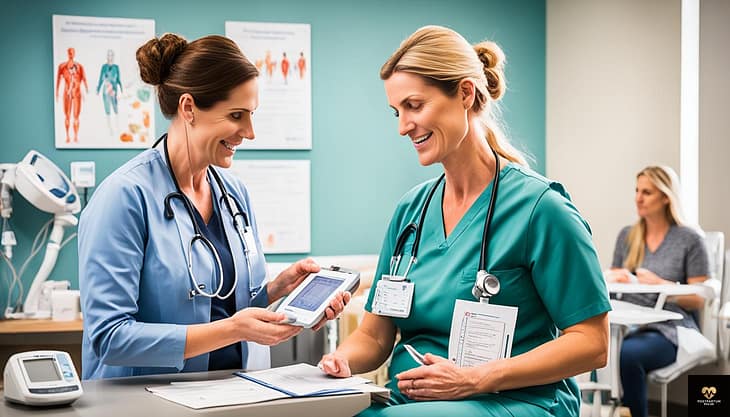
Being a new mom is both exciting and challenging. A key step is going to your postpartum visits. Yet, almost 40% of new moms in the U.S. miss these checkups7. The American College of Obstetricians and Gynecologists (ACOG) now suggests all new moms should see their healthcare provider within 3 weeks after birth7.
This visit is crucial for your recovery and your baby’s health and feeding needs.
Physical Recovery
The postpartum visit includes a detailed physical check-up. It looks at how you’re healing from your delivery and checks your overall health. This is a great chance to talk about any issues, like pain, incontinence, or breastfeeding problems7.
If you have health conditions like high blood pressure, obesity, or mood disorders, this visit is key for monitoring and managing them7.
Infant Care and Feeding
At the postpartum visit, your healthcare provider will check on your baby’s feeding and weight gain. They might offer lactation support or suggest seeing a lactation consultant if needed7. It’s important to get your baby off to a good start with feeding and overall health.
Remember, postpartum care is an ongoing process8. By scheduling and going to these visits, you and your baby can do well during this big change.
Prioritizing Your Wellbeing as a New Mother
Being a new mom means focusing on your own health after having a baby. Pregnancy and childbirth can be hard on your body and mind. It’s key to look after yourself as you start this new journey9.
In the first weeks after having a baby, you might feel the “postpartum blues.” This means mood swings, irritability, and feeling sad or anxious. These feelings usually go away in two to six weeks9. But if they don’t, or get worse, you might have postpartum depression. You’ll need help from a professional9.
Here are some ways to take care of yourself:
- Make sure you rest and sleep well. Ask family and friends for help in the first week to help you recover9.
- Eat well and drink plenty of water. Good food and water help your body and mind stay healthy10.
- Start gentle exercises when you can. Being outside and breathing fresh air can lift your mood9.
- Try not to spend too much time on social media. Comparing yourself to others isn’t helpful9.
- Enjoy the little wins, like showering, as they’re big achievements right now9.
If you’re dealing with postpartum depression, anxiety, or mood changes, get help10. Talking to a therapist, joining family therapy, or being in a support group can really help10.
Remember, taking care of yourself is important. By focusing on self-care and getting the support you need, you can make your postpartum time healthier and happier.

Postpartum: Recognizing and Addressing Warning Signs
As a new mom, knowing the warning signs for postpartum health issues is key. Postpartum hemorrhage (PPH) can happen up to 12 weeks after birth. It’s a serious issue marked by heavy bleeding or bleeding that gets worse over time11. Mild preeclampsia can start after 37 weeks and might cause vision changes, headaches, or sudden weight gain11.
Watch out for deep vein thrombosis (DVT), which shows as pain, swelling, or redness in the legs. Postpartum preeclampsia can lead to chest pain, coughing, or feeling like you can’t breathe1112. Postpartum depression (PPD) is also a concern, showing as strong sadness, anxiety, or harmful thoughts1112. Don’t ignore signs of infection like fever or pain around cuts or in the breasts11.
Seek Medical Attention for Concerning Symptoms
If you notice any of these signs, get medical help right away. “These symptoms can be life-threatening,” warns Dr. Rosser. “Don’t think they’re just from being tired. If it feels off, call your doctor or go to the ER.”11
Postpartum issues can happen fast, so it’s best to be careful. Your health and your baby’s are too precious to risk. Always ask for help if you’re worried during this time.
“These symptoms can be life-threatening. Don’t ignore them or chalk them up to just being tired and postpartum. If it’s something that is out of the ordinary, please contact your doctor or go to the emergency room.”
Embracing Self-Care: Five Steps for a Healthy Postpartum Journey
As a new mom, the postpartum period can feel overwhelming. But, focusing on self-care can change everything. Here are five key steps to help you through this time:
Adequate Rest and Sleep
Rest and sleep are crucial for your recovery and health. Make sure to rest when the baby sleeps13. Create a sleep-friendly space to get the rest you need14. Understanding the value of self-care helps you deal with sleep loss and builds strength for parenting15.
Proper Nutrition and Hydration
Good nutrition is key to your recovery and health. Eat a balanced diet, drink plenty of water, and eat foods rich in nutrients for you and your baby. Looking after your nutrition can help with recovery and breastfeeding.13 Mindfulness and relaxation can also reduce stress and support your health during this time15.
Self-care isn’t just about treating yourself; it’s about building strength for parenting. By following these five steps, you can make the postpartum period easier. You’ll come out stronger and more resilient.
“Self-care can help in rediscovering identity and act as a lifeline habit for mothers in the postpartum phase.”13
| Benefits of Postpartum Self-Care | Description |
|---|---|
| Enhance Mental Health | Daily self-care routines help promote resilience and emotional balance, reducing the likelihood of developing maternal mental health issues14. |
| Increase Energy Levels | Taking time to rest and recharge enables mothers to better tackle the challenges of pregnancy and early parenthood14. |
| Foster Positive Relationships | When mothers prioritize their well-being, they’re more equipped to engage in nurturing and supportive interactions with their families and support systems14. |
| Improve Overall Health | A balanced self-care routine incorporates practices that contribute to overall physical health, benefiting both mother and baby14. |
By following these five steps and focusing on self-care, you can make the postpartum period easier. You’ll become a stronger, more resilient mom. Remember, taking care of yourself is key to a healthy journey with your new baby131514.
Comprehensive Postpartum Services at University OB/GYN Associates
At University OB/GYN Associates in Syracuse, New York, our team of board-certified doctors is here to help new moms. They focus on postpartum care and support16. This period, lasting about six weeks16, is crucial for the health of both mom and baby.
Postpartum Check-ups
Postpartum check-ups are key for the mom’s recovery and a smooth transition16. Our doctors will guide you, addressing any issues like tearing or complications16.
Emotional Support and Counseling
The postpartum period can be tough, with many moms feeling the “baby blues” or depression16. We offer emotional support and counseling at University OB/GYN Associates16. Our team is ready to listen and help you with mental health resources.
Breastfeeding Guidance
Breastfeeding can be rewarding but challenging for new moms16. Our lactation consultants provide personalized support16. They offer tips and techniques for a positive breastfeeding experience, addressing issues like engorgement and helping with feeding routines.
Contraceptive Counseling
Thinking about your family planning is important after having a baby17. Our team at University OB/GYN Associates offers comprehensive contraceptive counseling17. We’ll help you choose from birth control pills, IUDs, implants, or permanent sterilization, based on your preferences and goals.
University OB/GYN Associates is dedicated to supporting you during your postpartum journey17. Our approach ensures you get the care and resources you need to thrive as a new mom1617.
“Transitioning into motherhood is a profound and transformative experience. Our team is here to provide the support and guidance you need to navigate this journey with confidence and grace.”
Conclusion
The postpartum period, or fourth trimester, is key for new moms to focus on their health and wellbeing18. In 2003, over 4 million babies were born in the U.S., with 84.1% of moms getting prenatal care early18. Regular postpartum visits, spotting warning signs, and practicing self-care help women through this change with their healthcare team’s support.
At University OB/GYN Associates, we aim to give full postpartum care to help new moms succeed in this vital phase18. In some European countries, health-care pros often visit new moms at home after childbirth18. In the Netherlands, a week-long home care program for normal births is covered by insurance and staffed by experts18. Norway also has maternity centers near hospitals where families can stay together during postpartum care.
Ensuring all new moms get the resources and support they need is key for their health and the fourth trimester18. Together, we can help women take control of their postpartum care. This builds a healthier, stronger community for everyone.
FAQ
What is the importance of the fourth trimester?
The fourth trimester is crucial for a mother’s health, just like the first three. It’s a key time to focus on her wellbeing and help her adjust to motherhood smoothly.
What are the ACOG recommendations for postpartum care?
ACOG suggests mothers meet with their OB-GYN within three weeks after giving birth. They should have ongoing care and a full postpartum visit by 12 weeks. A postpartum care plan should be made during pregnancy.
Why do many mothers miss their postpartum follow-up visit?
Only 40% of mothers go to their postpartum check-up. It’s a busy time, and the visit might get overlooked. But, it’s vital for managing health, planning for the future, checking mental health, and tracking physical recovery.
What is included in a postpartum visit?
The visit covers a full physical check-up, looking at healing from delivery, and checking the baby’s health. Breastfeeding help from lactation consultants is also offered if needed.
What are the warning signs to look out for during the postpartum period?
If you notice fever, heavy bleeding, dizziness, shortness of breath, severe headache, or signs of postpartum depression, get medical help right away. These signs can be serious and shouldn’t be ignored.
What are five steps for a healthy postpartum journey?
For a healthy postpartum, focus on: 1) Rest, 2) Good nutrition, 3) Physical activity, 4) Mental health, and 5) Birth control.
Read more here.
What postpartum services are offered at University OB/GYN Associates?
University OB/GYN Associates provides full postpartum care. This includes regular check-ups, emotional support, breastfeeding advice, and help with family planning.